Twelve months of testing reveals continued bacterial pollution levels at Aysgarth Falls
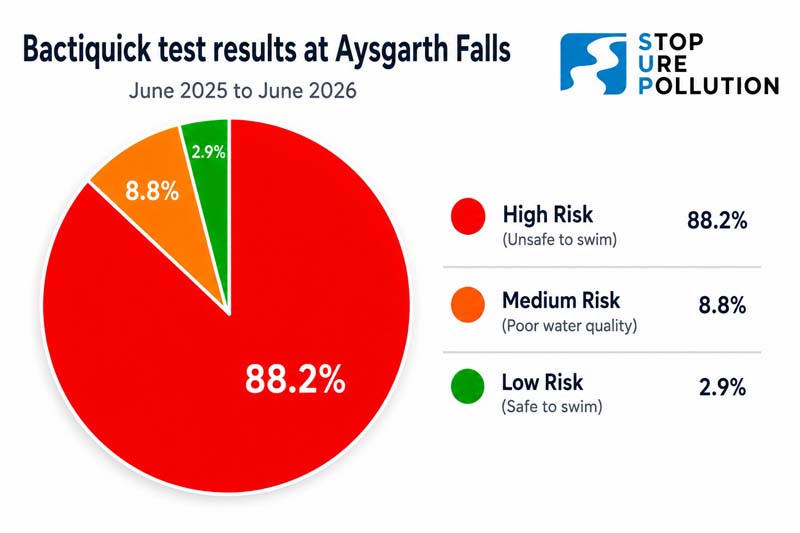
Stop Ure Pollution (SUP) has completed a full year of weekly water quality monitoring at Aysgarth Falls on the River Ure, revealing persistent and concerning levels of bacterial pollution at one of Yorkshire's most popular inland bathing locations. (See below for the piechart created by Toby Milbank)
Between June 2025 and June 2026, volunteers carried out weekly testing using the Bactiquick bacterial endotoxin testing system, producing what is believed to be one of the most comprehensive independent datasets collected on the River Ure. The results indicate that almost nine out of every ten weekly samples (88.2%) fell into the "High Risk" category, with only 2.9% of samples indicating low risk.
Stop Ure Pollution is now urging swimmers, paddleboarders, kayakers, canoeists, anglers, dog walkers and anyone entering the river to exercise caution.
Endotoxins are recognised indicators of bacterial contamination and can trigger powerful inflammatory responses in humans. Exposure through contaminated water or inhalation of water spray has been associated with skin irritation, eye irritation, respiratory symptoms, fever-like illness and gastrointestinal problems, while higher levels of exposure may lead to more serious reactions.
The group says it is regularly contacted by members of the public who report becoming unwell after using the River Ure for recreational activities. They have erected signs at popular sites to warn river users of the health risk.
Stop Ure Pollution advises anyone using the river to:
• Avoid swallowing river water.
• Wash hands thoroughly after leaving the water and before eating.
• Shower as soon as possible after swimming or paddling.
• Cover any open cuts or abrasions before entering the water.
• Prevent dogs from drinking river water where pollution is suspected.
• Take extra care following periods of rainfall or when the river appears particularly turbid.
The organisation says that although further scientific investigation is continuing, one of the strongest patterns emerging from the year's monitoring is the relationship between high turbidity (cloudy water caused by suspended material) and elevated bacterial endotoxin readings.
Early evidence suggests that the most likely causes are a combination of diffuse agricultural pollution from organic manures, slurry and farmyard manure, together with contamination arising from untreated sewage discharges from waste treatment works.
During the 2025/26 winter spreading season SUP volunteers recorded and reported to the Environnment Agency what appeared to be illegal slurry spreading on 192 acres of farmland. It is illegal to spread slurry on waterlogged, frozen ground, within 10 metres of a watercourse, or without agronomic justification. The organisation says the Environment Agency has indicated it is preparing for further monitoring and enforcement activity during the coming winter.
The group is also concerned about sewage infrastructure throughout the catchment. According to publicly available spill data, Yorkshire Water's 18 sewage treatment works within the River Ure catchment recorded 1,797 sewage overflow events during 2025, lasting a combined total of 4,215 hours.
Richard Loukota, Chairman of Stop Ure Pollution, said:
"After testing the River Ure weekly for the past year at two locations, the extent of the pollution has become abundantly clear. These are not isolated incidents or one-off pollution events—they point towards a river under continual pressure from multiple sources. We believe the long-term solution is equally clear. Illegal slurry spreading must be eliminated through a combination of common sense backed up by stronger monitoring and enforcement. Yorkshire Water must continue investing in its sewage treatment infrastructure to reduce spills. Farmers should be supported in fencing livestock away from riverbanks and establishing wide natural buffer strips that filter pollutants before they reach the river.
"Only by tackling agricultural runoff and sewage pollution together will we begin to restore the River Ure to the healthy river that local communities, wildlife and visitors deserve."
Stop Ure Pollution will continue its weekly monitoring programme throughout 2026, with further data and analysis to be published as additional results become available.
Stop Ure Pollution would like to thank its committee, volunteers and members for their support as well as The Community Fund of the National Lottery and Surfers Against Sewage for funding the research.